
Science
Nanobubble technology has been developing over the last 15 years with applications in the chemical and pharmaceutical industry.
The difference now is that it is possible to make bubbles so small they become nanoplasmoids. This changes their properties completely, they become biochemically active toroids that are neutrally buoyant, staying in suspension for months or years. They also have a high-voltage negative charge, are very high pressure and have a huge surface area.
This makes nanoplasmoids uniquely tough and durable able to penetrate deep into tissue and cells.
NASA scientists are looking at the applications for astronaut wellness.
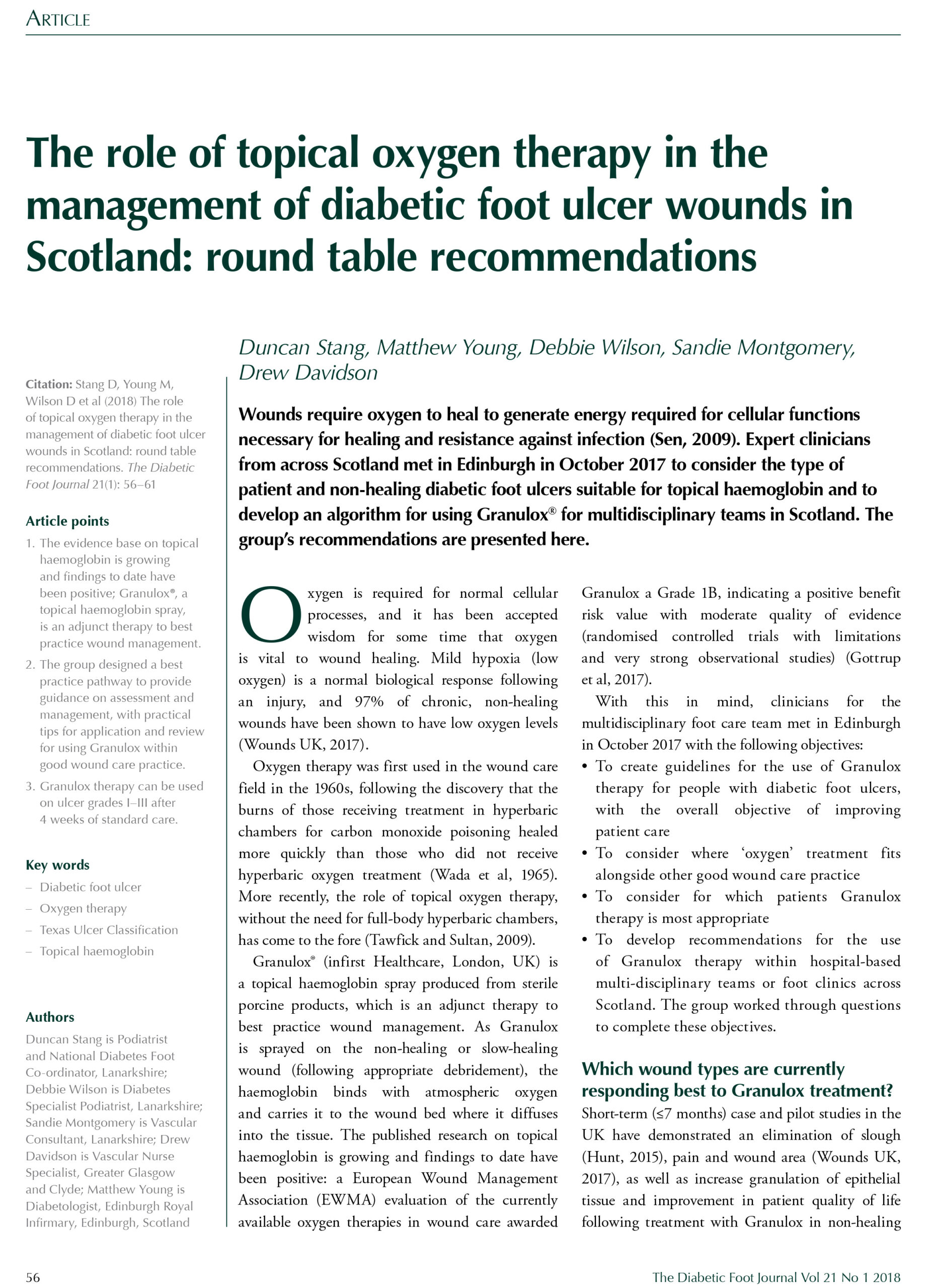
The role of topical oxygen therapy in themanagement of diabetic foot ulcer wounds inScotland: round table recommendations
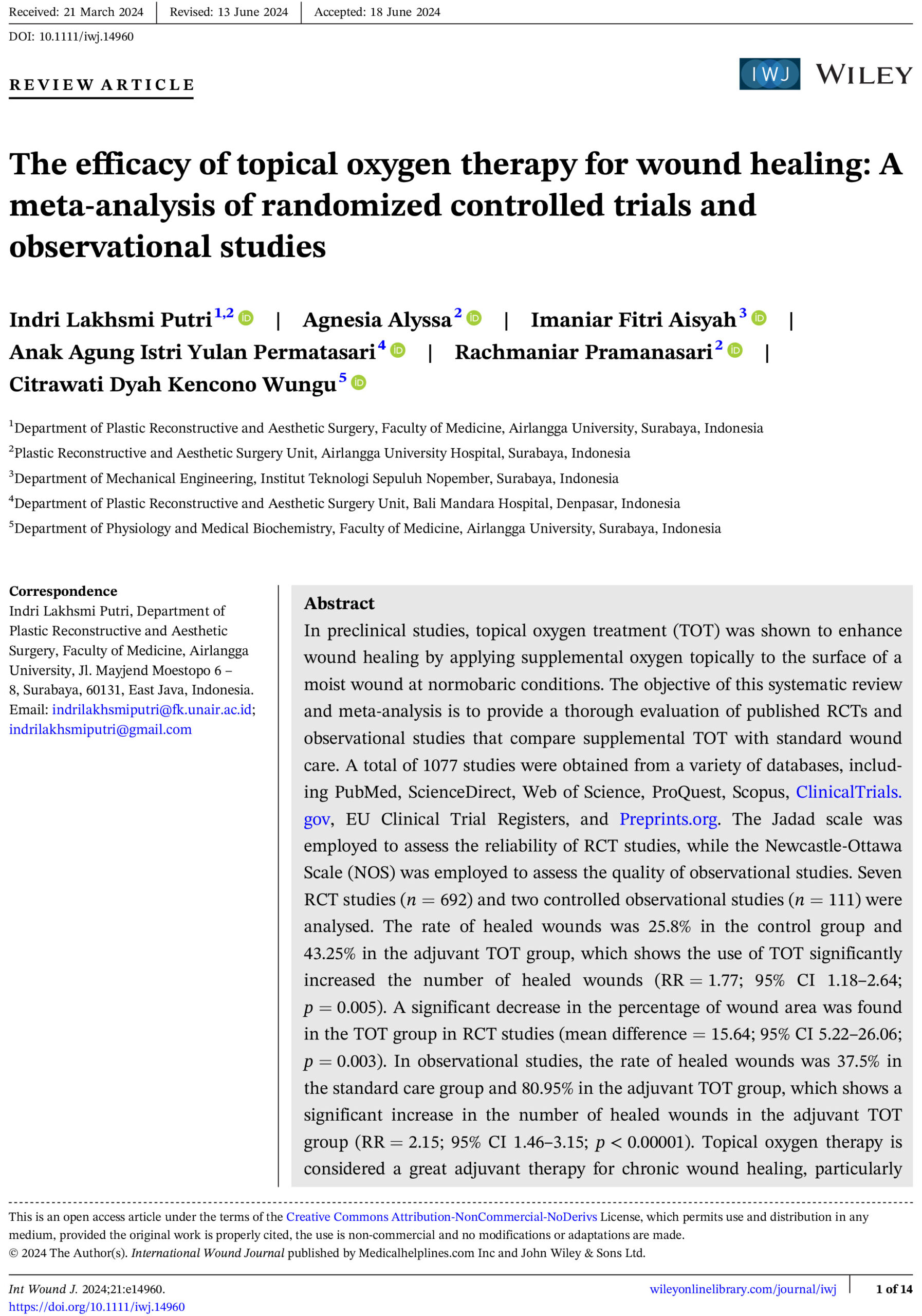
The efficacy of topical oxygen therapy for wound healing: Ameta-analysis of randomized controlled trials andobservational studies
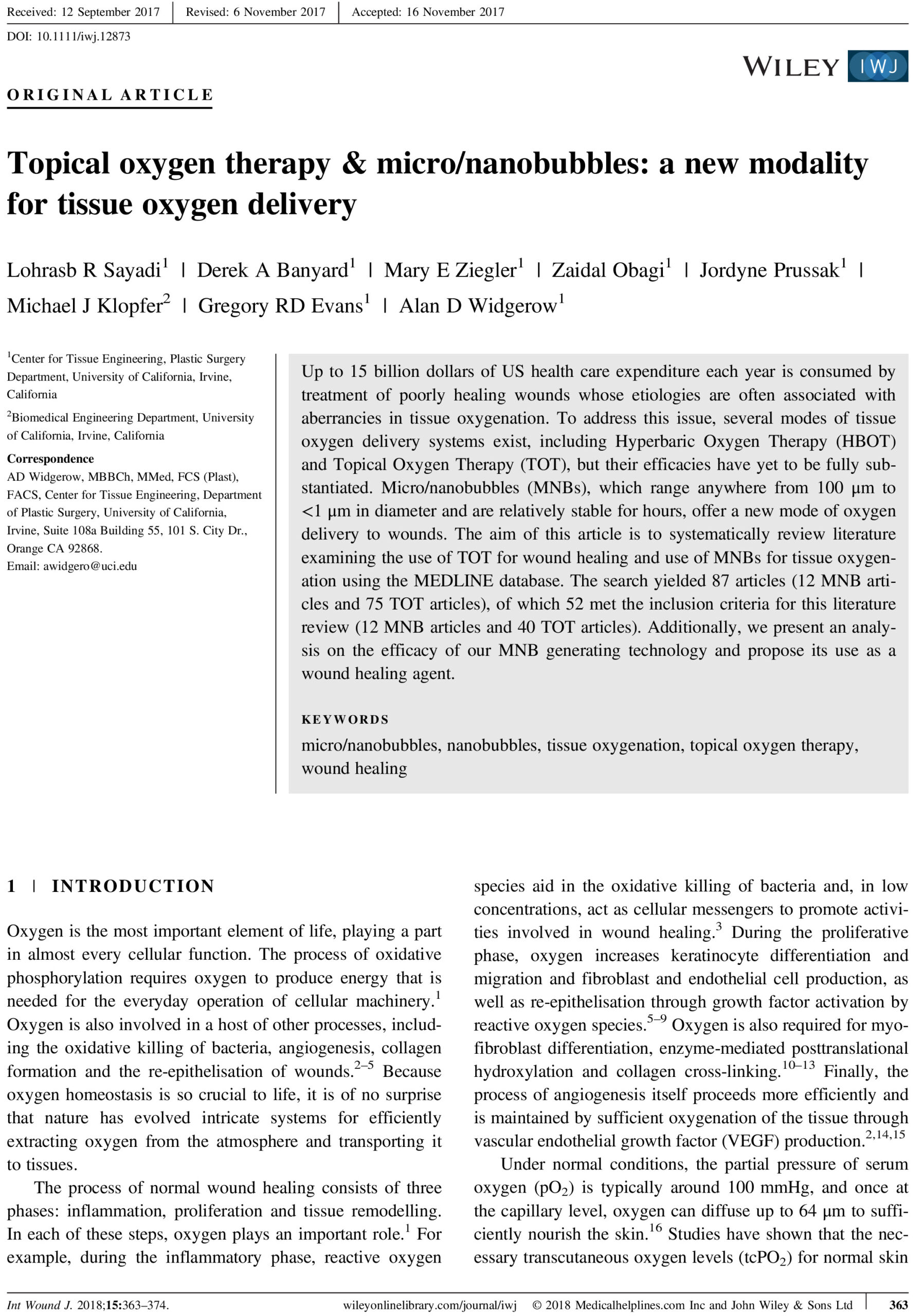
Topical oxygen therapy & micro/nanobubbles: a new modalityfor tissue oxygen delivery
A Double-Blind, Randomized, Placebo-Controlled Pilot Study examining an Oxygen Nanobubble Beverage for 16.1-km Time Trial and Repeated Sprint Cycling Performance
Properties of the water containing nanobubbles as a new technology of the acceleration of physiological activity
Structure and function of the endothelial surface layer: unravelling the nanoarchitecture of biological surfaces
What makes a Nanoplasmoid different
A nanoplasmoid is not a synonym for a nanobubble. Structurally, it is:
• A charged gaseous toroid
• Encapsulated inside a nanobubble
• Sustained by a persistent net-negative charge envelope
Why charge changes everything
Biology does not respond to volume first. It responds to signals. Cells communicate through electrical gradients, redox signalling, and charge-based attraction and repulsion.
A nanoplasmoid carries instruction, not just content. That charge envelope:
• Prevents incompatible gases from reacting with each other
• Allows multiple gases to coexist in the same vessel
• Signals to biology as usable, not foreign
Direct observation at the University of California
Researchers used a Scanning Transmission X-Ray Microscope (STXM) to directly image these structures and observed:
• Prevents incompatible gases from reacting with each other
• Allows multiple gases to coexist in the same vessel
• Signals to biology as usable, not foreign
This creates cell signalling. Tissues respond because the body recognises what it's receiving. Effects are cumulative.
This explains why Naneau hydrotherapy shows:
• Cumulative effects rather than transient ones
• Anti-inflammatory priming instead of oxidative stress
• Improvements that persist beyond the session itself